
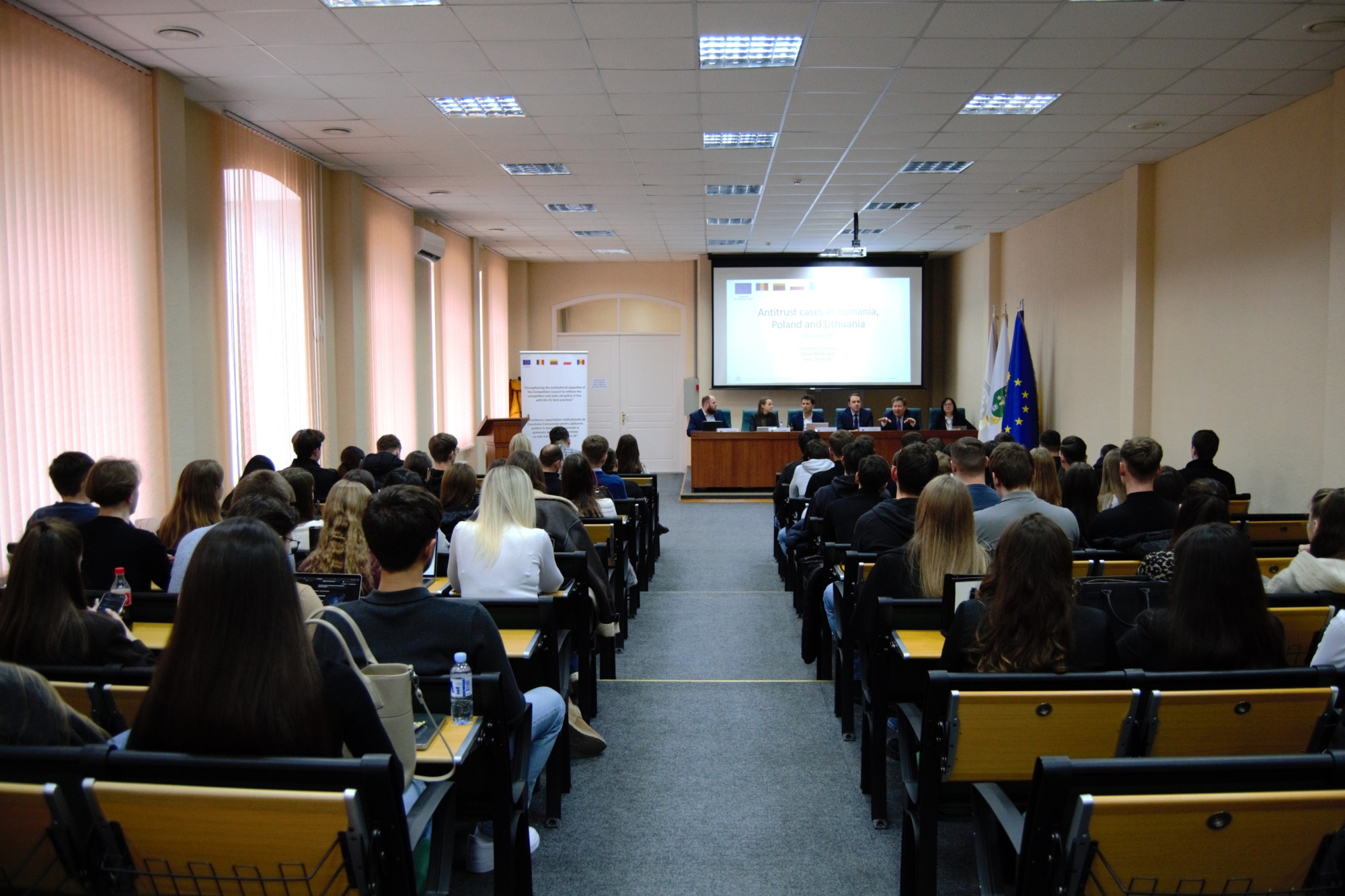
The Competition Council of the Republic of Moldova, in partnership with the Moldova State University (USM) and with the support of the Twinning Project, organised a public event on 8 December 2025 dedicated to the application of competition law in the European Union, marking the celebration of World Competition Day.
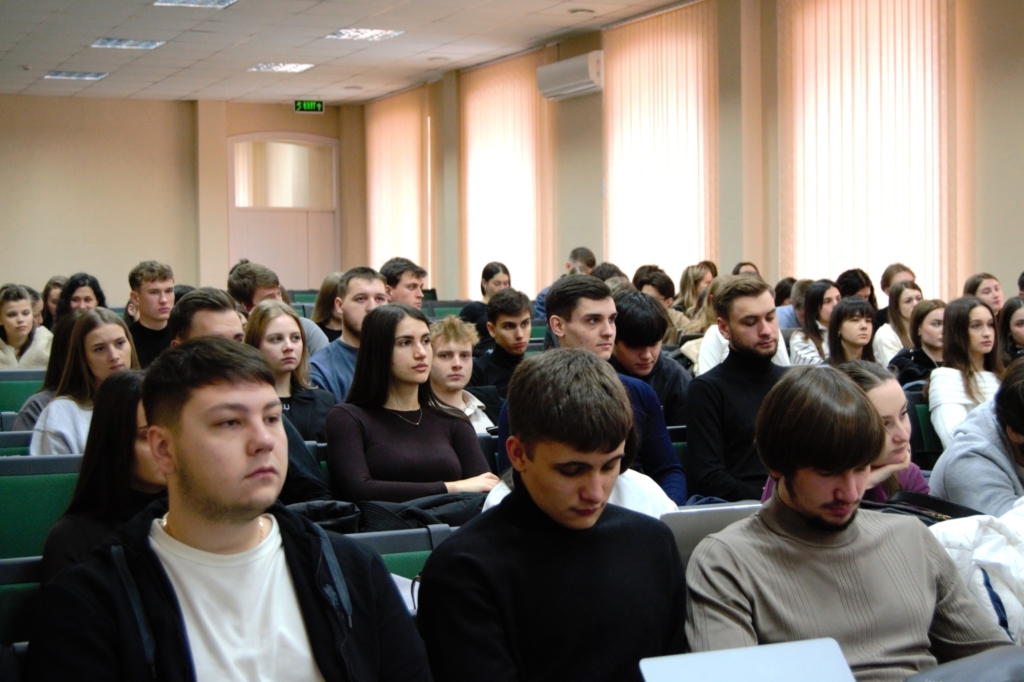
The event brought together students from the USM Faculty of Law who are interested in understanding how European authorities investigate and sanction anti-competitive practices.
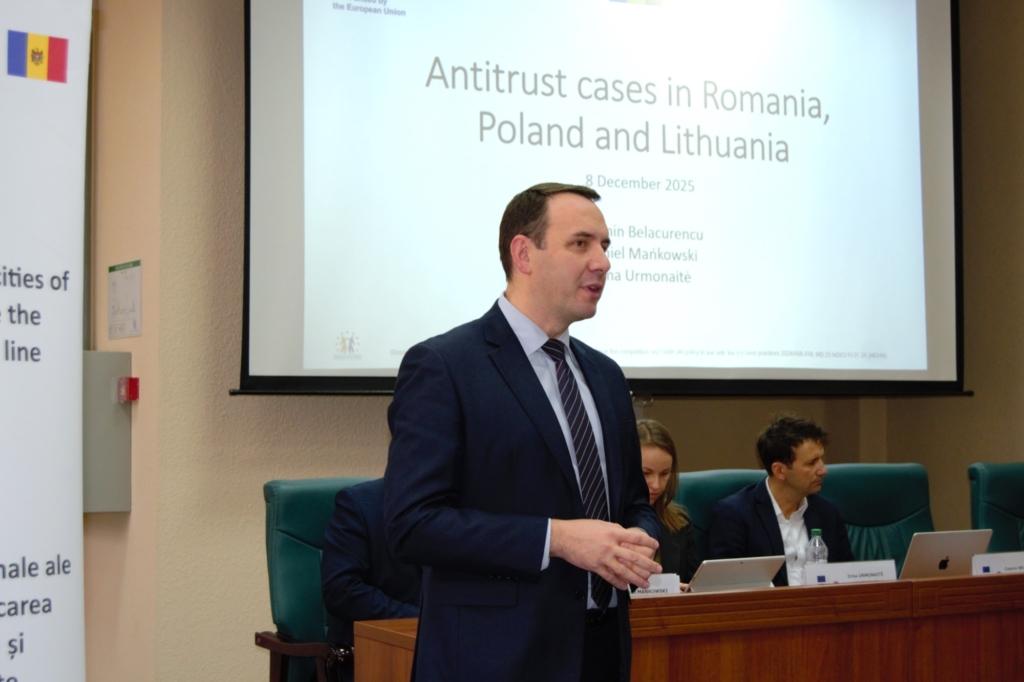
The session was opened by Alexei Gherțescu, President of the Competition Council of the Republic of Moldova, who emphasised the essential role of competition for the proper functioning of the economy. In his remarks, he highlighted the importance of training a new generation of specialists in this area, noting that the institution needs young talents who are motivated and well prepared legally. Mr. Gherțescu expressed his confidence that among the students present are future colleagues who will contribute to strengthening competition enforcement in the Republic of Moldova.
The Dean of the USM Faculty of Law, Sergiu Băieșu, also addressed the participants, underlining the importance of cooperation between academia and competition authorities, as well as the fundamental role of legal education in preparing professionals capable of contributing to the proper functioning of markets.
During the event, three international experts presented and analysed relevant cases from the application of Articles 101 and 102 of the Treaty on the Functioning of the European Union (TFEU). The presentations focused on investigations carried out by national competition authorities across various sectors and industries. The speakers explained how anti-competitive agreements and abuses of dominant position are assessed, highlighting the key criteria used to determine whether a particular behaviour constitutes an infringement of competition rules.
Their expertise underscored the importance of assessing both economic and legal evidence, including market structure, the position of the undertakings involved, potential effects on consumers, and the existence of any objective justifications. The experts also discussed the challenges associated with distinguishing legitimate unilateral conduct from behaviour that may constitute an abuse, as well as the difficulty in differentiating lawful cooperation between firms from agreements that restrict competition.
Moreover, the experts noted that many investigations are triggered by key questions such as: Why has market behaviour changed? What are the actual or potential effects on consumers? Are there indications of coordination between competitors? These questions guide the direction of the analysis and help authorities determine whether sufficient indications exist to pursue an investigation further.
Students had the opportunity to ask questions, discuss hypothetical scenarios, and examine the economic and legal implications of each case. The dialogue highlighted the growing interest of young people in competition law and in the mechanisms that ensure markets function in a fair and transparent manner.
Note: The Twinning Project “Strengthening the institutional capacity of the Competition Council to enforce competition policy and State aid rules in line with EU best practices” is financed by the European Union and implemented by Romania, Lithuania, and Poland over a period of 27 months.




 This web page is made possible by the support of the American people through the United States Agency for International Development (USAID). The contents do not necessarily reflect the views of USAID or the United States Government.